The hedge moved before I saw anything. A dry rustle, a pause, then a blackbird’s alarm call cutting through the cold air. I was standing on a suburban pavement at half past six in the morning, coffee going lukewarm in my hand, and it occurred to me that I had walked past this exact spot for years without ever really looking at it. Something was living here. I just hadn’t been paying attention.
That’s the odd thing about wildlife. It’s rarely far away. Most people assume you need a reserve, a hide, a long drive and a pair of binoculars worth more than a washing machine. You don’t. This beginner guide to wildlife watching is built on a simpler idea: start where you are, learn the rhythms of your local patch, and let patience do the heavy lifting. Gear helps, but it comes last.
Start where you are
The best place to begin watching wildlife is within walking distance of your front door. Not because distant places aren’t wonderful, but because you can visit a local patch often, and frequency is what teaches you things. A park you pass three times a week will show you more than a nature reserve you visit once a year.
Look for edges. Wildlife concentrates where two habitats meet: the boundary between a pond and its bank, a hedgerow and an open field, a line of trees and a mown path. These transition zones offer cover on one side and food or open ground on the other, which is exactly what most animals want. A scruffy corner of a local park, left unmown, will often hold more life than a tidy lawn ten times its size.
Water is another magnet. Even a small stream, a ditch or a garden pond pulls in birds, insects, amphibians and the mammals that hunt them. If your area has a canal, a river path or a coastal strip, you already have a strong starting point. Sit still near water for twenty minutes and something will usually show up.
Give your patch a name, even if it’s just in your head. Mine was the canal bend behind the retail park. Naming it makes it a place rather than scenery, and you’ll notice changes there that you’d otherwise miss. Over a few weeks you’ll start recognising individual birds, favourite perches, the corner where the heron always stands. That familiarity is the whole point.
Timing and seasons
Time of day matters more than most beginners expect. The first hour after sunrise and the last hour before dark are when a lot of wildlife is most active. Birds feed hard in the morning, mammals move under cover of low light, and the air is quiet enough that you’ll actually hear things. Midday in summer is often dead. If you only have one free hour, spend it early.
Weather shifts the picture too. A light drizzle brings worms to the surface and worm-eating birds onto lawns. A cold snap pushes waterfowl onto unfrozen patches. Windy days make birds skittish and hard to hear, so calm mornings after a front has passed are often gold. You don’t need to become a meteorologist. Just notice what your patch does in different conditions and build a rough mental map.
Seasons change everything, and that’s a gift rather than a problem. Spring brings birdsong, nesting and the first leaves — the loudest, busiest time to start. Summer is lush but hidden; learn to look for movement in foliage rather than shapes. Autumn delivers migration, berries and restless flocks moving through. Winter strips the trees bare and makes birds easier to see, and it’s the season when your local patch can suddenly hold visitors from far away.
Keep a few notes, even on your phone. Date, weather, what you saw, roughly where. After a year you’ll have something genuinely useful: your own record of what turns up when. That’s far more valuable than any app’s generic advice, because it’s about your place.
Fieldcraft basics
Fieldcraft is the unglamorous art of not scaring things away. It matters more than optics. Most beginners see less because they move too much, talk too loudly and approach too directly — not because their binoculars are cheap.
Walk slowly and stop often. Animals notice movement and pattern far more than they notice a still human shape. Pause at the edge of an open area, scan, then move on. If you spot something, stop where you are and watch from there rather than creeping closer. Ten metres of patience usually beats two metres of approach.
Dress to blend in rather than to impress. Muted greens, browns and greys work well; bright whites and neons stand out badly. Avoid rustling fabrics and jangling keys. Soft, quiet footsteps are worth more than any camouflage pattern.
Use your ears first. Most wildlife is heard before it’s seen. Learn a handful of common calls — blackbird, robin, wren, wood pigeon, crow — and you’ll start noticing when something different cuts through. A sudden silence in a chorus of birdsong often means a predator is nearby, so that’s the moment to look up.
Respect the animals. Don’t chase, corner or handle them. Don’t get between a parent and its young. Keep dogs on leads around nesting and grazing areas, and stay on paths where ground-nesting birds might be hidden. If an animal changes its behaviour because of you — stops feeding, stares, moves away — you’re too close. Back off and let it settle. Watching wildlife is a privilege, not a right, and the best watchers leave no trace.
One more thing: learn to wait. The single biggest difference between a beginner and someone who sees a lot is tolerance for boredom. Sit still for twenty minutes and the local wildlife will gradually forget you’re there. That’s when the good stuff happens.
A simple kit list
You can start with nothing but comfortable shoes and time. Everything else is optional, and you should add it slowly, only when you notice a genuine gap.
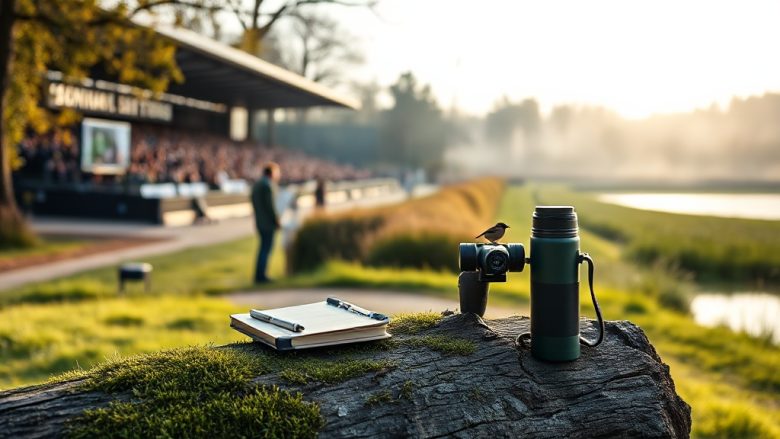
Binoculars are the classic first purchase, but don’t rush. Something modest and easy to hold beats something powerful and shaky. Look for a pair you can carry all day without noticing, and practise using them on a fixed object before you try them on a moving bird.
A notebook or a notes app is genuinely useful, and costs nothing. Record what you saw, when and where. A local field guide — physical or on your phone — helps you put names to things, but don’t let identification become the goal. Watching is the goal; naming is a bonus.
Layer your clothing rather than buying specialist gear. Waterproof boots, a quiet jacket in a dull colour and a hat will cover most conditions. In summer, insect repellent matters more than anything else. In winter, gloves you can still use binoculars in are worth hunting for.
If you want one small extra, a magnifying glass opens up a whole world of leaves, bark, moss and insects that binoculars can’t reach. It’s cheap, light and endlessly rewarding.
That’s really the message of this beginner guide to wildlife watching. The wildlife is already there, going about its business in the hedge, the ditch, the scrappy corner of the park. You don’t need to travel far or spend much. You just need to slow down, show up regularly, and pay attention. Start this week. Pick a spot, go early, sit still, and see what turns up.